
Dental Implants

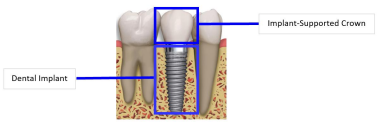
Dental implant treatment is a method of replacing missing teeth. Dental implant treatment typically involves two separate but related phases: the surgical phase (placement of the dental implant into bone) and the restorative/prosthetic phase (creating a prosthesis which emerges from the dental implant into the oral cavity). Before considering dental implant treatment, a comprehensive exam is required to examine several variables including: medical health, overall dental health, risk factors such as smoking/diabetes/history of radiation treatment, amount of bone present to support the implant, amount of gum tissue present in the region of implant placement, number of teeth being replaced, and the stability of the bite.
Not all patients are ideal candidates for implant treatment and your level of risk will be communicated to you at your consultation. Depending on your risk level, your treatment may require additional procedures such as bone grafting as well as an interdisciplinary approach to care with assessments by additional specialists such as an oral radiologist, periodontist, and oral surgeon. As with all tooth replacements, long-term follow-up is required after dental implant treatment is completed to ensure health of both the bone levels around the implant as well as long-term maintenance of the mechanical aspects of the internal portions of the prosthesis.